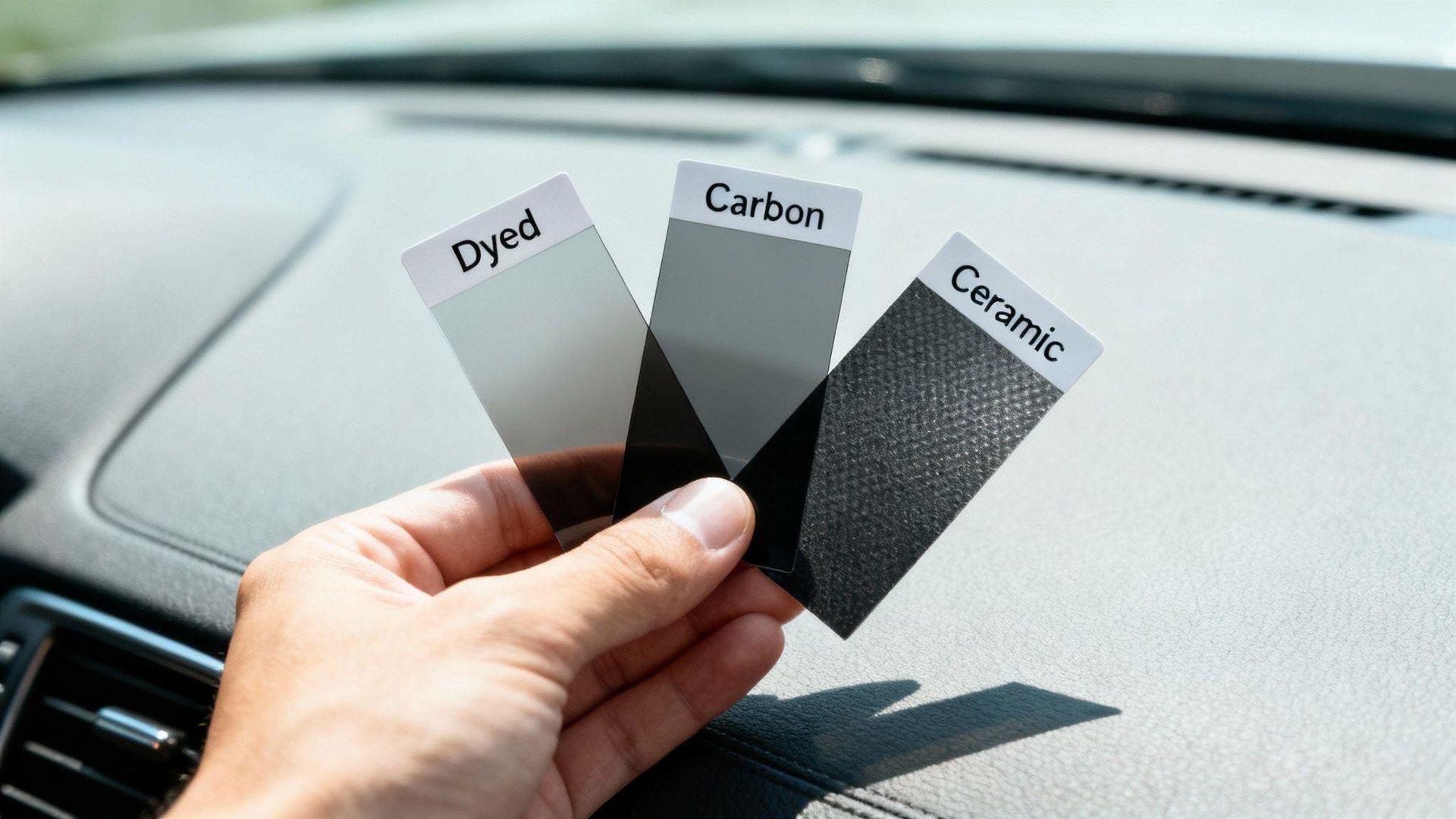
What's the Difference: Dyed vs Carbon vs Ceramic Tint?
Not all window tint is built the same, and that matters more than most drivers realize. If you are comparing dyed vs carbon vs ceramic tint, the biggest differences are not just appearance or price. The type of film you choose directly affects how much heat your vehicle blocks, how well your interior is protected from UV exposure, how clear the glass looks over time, and how long the tint is likely to last. In Northwest Georgia, where sunny days, warm summers, and daily driving add up fast, those differences become even more important. Ceramic tint is often the smartest long-term option for many car owners, truck owners, and SUV drivers, but it is not automatically the right fit for every budget or every vehicle. The best choice depends on your goals, your climate, your vehicle, and how long you plan to keep it.
Table of Contents
- What Is Dyed Window Tint and How Does It Work
- What Is Carbon Window Tint and Why Is It a Step Up
- What Is Ceramic Window Tint and What Makes It the Premium Choice
- Dyed vs Carbon vs Ceramic Tint: Side-by-Side Comparison
- Which Tint Type Is Best for the Georgia Heat
- How Window Tint Shade Levels Affect Performance Across All Three Types
- Why the Tint Film Brand Matters as Much as the Type
- Frequently Asked Questions
What Is Dyed Window Tint and How Does It Work
Dyed window tint is usually the entry-level option in a window tint film comparison. It uses layers of polyester film with dye added to help darken the glass and absorb some solar energy. For drivers who mainly want a darker look, basic privacy, and reduced glare at a lower price point, dyed tint can meet the need.
How dyed tint controls light and heat
Dyed film works by absorbing part of the sun's energy rather than reflecting or rejecting as much heat as higher-end films. That means it can improve comfort somewhat, especially compared with untinted glass, but it usually does not deliver the best window tint for heat rejection. On very hot days in Rome GA, a dyed film may still allow significant cabin heat buildup, especially on large side windows and windshields that receive direct sun.
Where dyed tint makes sense
Dyed tint is often chosen by drivers who want an affordable visual upgrade, a cleaner appearance, and basic glare reduction. It can be a practical option for older vehicles, secondary cars, or owners who are mainly concerned with style and privacy rather than premium thermal performance.
Limitations to understand before you buy
The main downside is long-term performance. Dyed films generally offer lower heat rejection, and lower-tier products are more likely to fade or shift in color over time. Some films can take on a purplish tone as they age. Lifespan, appearance, and warranty support vary by manufacturer, which is why window tint types explained by film category alone never tell the whole story.
Short answer: dyed tint is usually the most budget-friendly option, but it also tends to offer the least heat rejection and the shortest service life.
What Is Carbon Window Tint and Why Is It a Step Up
Carbon window tint sits in the middle of the market and is often viewed as a meaningful upgrade from dyed film. Instead of relying mainly on dye, carbon film incorporates carbon-based particles that improve solar performance, color stability, and the overall look of the finished installation.
Why many drivers prefer carbon over dyed
In a carbon tint vs ceramic tint discussion, carbon is often the value option for people who want stronger heat control than dyed film without moving all the way into premium ceramic pricing. Carbon tint typically provides better infrared heat management than dyed tint, improved fade resistance, and a richer, more neutral appearance.
Performance benefits for daily drivers
For commuting, school pickup, errands, and road trips around Northwest Georgia, carbon tint can make the cabin more comfortable and reduce eye strain from harsh sunlight. It also helps protect interior materials from prolonged UV exposure. Depending on the film line, carbon products often strike a balance between appearance, comfort, and long-term value.
Where carbon still falls short
Carbon is a step up, but it is not always the top-performing product in high-heat environments. Premium ceramic films generally outperform carbon when the goal is maximum heat rejection, best-in-class clarity, and top-tier overall comfort. Drivers who spend long hours on the road, park outside often, or plan to keep a vehicle for many years may still find ceramic to be the stronger long-term investment.
Short answer: carbon tint is a solid mid-range option that offers better heat control and durability than dyed film, but usually not the same premium performance as ceramic.
What Is Ceramic Window Tint and What Makes It the Premium Choice
Ceramic window tint is widely considered the premium option because it is designed for strong solar performance without relying on metal or low-grade dyes. High-quality ceramic films use advanced non-metallic particles to help reduce heat, block harmful UV rays, maintain optical clarity, and support long-lasting performance.
Why ceramic tint is often recommended first
When drivers ask about the best window tint for heat rejection, ceramic is usually the leading answer. That is because it is engineered to deliver excellent thermal performance while preserving visibility and signal-friendly operation. It can help reduce cabin temperatures, improve comfort on sunny drives, and lower strain on air conditioning during Georgia summers.
Key benefits of ceramic tint
- Strong heat rejection for hot climates
- Excellent UV protection for skin and interior surfaces
- Low glare with clear, crisp visibility
- No metal content, so signal interference is typically not a concern
- Stable color and appearance over time
Who benefits most from ceramic window tint
Ceramic window tint in Rome GA is especially appealing for drivers who keep vehicles for the long term, drive daily, carry children or pets, or simply want the best available comfort and protection. It is also a smart fit for newer vehicles where owners want a premium finish that matches the value of the vehicle itself.
At Latitude 33 Tint, the use of XPEL window film products supports that premium positioning naturally. Film quality, product consistency, and warranty-backed installation matter when you are paying for a top-tier result. A well-installed premium film should not just look good on day one. It should continue performing and holding its appearance over time.
Short answer: ceramic tint usually delivers the best overall mix of heat rejection, UV protection, clarity, and long-term value.
Dyed vs Carbon vs Ceramic Tint: Side-by-Side Comparison
If you want the simplest possible answer, here it is. Dyed tint is usually best for budget-conscious drivers. Carbon tint is often best for drivers who want a strong middle-ground upgrade. Ceramic tint is typically best for drivers who want premium performance and long-term ownership value.
Main comparison table
| Category | Dyed Tint | Carbon Tint | Ceramic Tint |
|---|---|---|---|
| Heat rejection percentage | Lower to moderate, often about 20% to 35% depending on film and shade | Moderate to strong, often about 35% to 55% depending on film and shade | Strong to premium, often about 45% to 70% or more depending on film and shade |
| UV protection level | Good with quality film, but varies by brand | Very good to excellent | Excellent |
| Glare reduction | Good | Very good | Very good to excellent |
| Signal interference | Typically none | Typically none | Typically none |
| Fade resistance and lifespan | Lower overall, especially with lower-tier products | Better color stability and durability | Best long-term stability in premium lines |
| Price range | Lowest | Mid-range | Highest |
| Best use case or ideal buyer | Drivers focused on appearance and lower upfront cost | Drivers seeking balanced performance and value | Drivers wanting maximum comfort, clarity, and long-term protection |
What this means in practical terms
The dyed vs carbon vs ceramic tint decision often comes down to what problem you are trying to solve. If your top complaint is cabin heat, ceramic usually rises to the top. If your main goal is improving looks while staying on budget, dyed may be enough. If you want stronger performance but still want to manage cost carefully, carbon can be the sweet spot.
Important note about percentages
Exact performance numbers vary by product line, legal shade, test method, and manufacturer. That is why the best window tint film comparison should always consider both tint type and film brand together, not just the category name by itself.
Which Tint Type Is Best for the Georgia Heat
For hot and sunny conditions in Rome GA and across Northwest Georgia, ceramic tint is usually the best choice. It generally provides the strongest heat rejection and the most noticeable comfort improvement during long summer drives, stop-and-go traffic, and outdoor parking.
Why climate matters in this decision
Georgia heat is not just about air temperature. Solar intensity, high humidity, sun exposure through side glass, and the way dark interiors hold heat all affect how hot your vehicle feels. Drivers with trucks and SUVs often have larger glass areas, which can increase the need for better-performing film. In those cases, the gap between dyed and ceramic performance may feel substantial in real-world driving.
Hot climate comparison
| Film Type | Performance in Northwest Georgia Heat | Best Fit |
|---|---|---|
| Dyed Tint | Basic improvement, but may still allow significant cabin heat during peak summer sun | Short-term budget installs or appearance-focused buyers |
| Carbon Tint | Noticeable step up in comfort and a better option for many daily drivers | Drivers seeking better thermal value without premium pricing |
| Ceramic Tint | Best overall comfort, strongest heat reduction potential, and best premium feel | Drivers who want top performance in hot, sunny weather |
Best choice by ownership style
If you lease a vehicle or plan to sell soon, carbon may be enough. If you own a newer vehicle, spend a lot of time driving, or want the strongest long-term return on your tint investment, ceramic is often worth serious consideration. For families, commuters, and drivers who park outdoors at work, better heat control can become a daily quality-of-life upgrade.
Short answer: for Georgia heat, ceramic is usually the top recommendation, with carbon as a strong second choice.
How Window Tint Shade Levels Affect Performance Across All Three Types
Shade level and film type are not the same thing, and that is one of the most common points of confusion. A darker tint does not automatically mean better technology. Two vehicles can have a similar appearance from the outside while offering very different heat rejection on the inside.
Darkness versus technology
Shade refers to visible light transmission, often shortened to VLT. Film type refers to the construction and materials used in the product. That means a lighter ceramic film can sometimes outperform a darker dyed film when it comes to comfort and solar control. This is one reason window tint types explained properly should always separate appearance from performance.
How shade impacts glare and privacy
Darker shades typically improve glare reduction and privacy, but performance still depends on the film itself. If a driver wants a refined look and meaningful cabin comfort, choosing a quality film can matter more than simply choosing the darkest shade available. Legal requirements also matter, so shade selection should be matched to local regulations and practical visibility needs.
Best way to think about shade levels
- Choose shade for appearance, privacy, and glare goals
- Choose film type for heat rejection, clarity, and long-term durability
- Use both together to build the right package for your vehicle and driving habits
For example, a driver researching professional window tinting near me may assume that darker always means cooler. In reality, advanced ceramic film can often provide stronger comfort benefits even when the shade is moderate rather than extremely dark.
Why the Tint Film Brand Matters as Much as the Type
Tint category tells part of the story, but brand quality often determines whether you are actually getting the performance you paid for. Two ceramic films can both be labeled ceramic while still differing in clarity, consistency, adhesive quality, warranty support, and long-term durability.
Why film brand changes the real-world result
High-quality manufacturers invest in better materials, tighter quality control, and more reliable product data. That helps installers deliver a cleaner finish and helps owners feel more confident that the film will continue performing over time. Lower-cost films may look similar at first but can age differently, especially under heavy heat and sun exposure.
Why XPEL is a relevant premium option
Latitude 33 Tint uses XPEL window film products, which fits well for customers looking for a premium solution rather than just the lowest upfront price. For drivers comparing carbon tint vs ceramic tint, a recognized film brand adds confidence around optical clarity, UV protection, product consistency, and warranty-backed installation. That does not mean every driver needs the highest-tier film, but it does mean the brand deserves a place in the buying decision.
What to ask before choosing a tint package
- What type of film is being installed
- What warranty supports the product and installation
- How the film is expected to perform in high heat
- How long the product is designed to hold its color and clarity
- Whether the installer uses a reputable premium brand
Short answer: the right film brand can make the difference between a tint package that simply looks dark and one that delivers lasting comfort, protection, and value.
Frequently Asked Questions
What is the difference between dyed and ceramic window tint?
Dyed tint mainly improves appearance and glare reduction at a lower price, while ceramic tint is engineered for stronger heat rejection, better UV protection, and longer-lasting performance.
Is ceramic tint worth the extra cost?
For many drivers, yes. If you care about heat reduction, long-term durability, daily comfort, and protecting your interior, ceramic tint often justifies the higher upfront cost.
Does carbon tint block heat better than dyed tint?
In most cases, yes. Carbon tint is generally a step up from dyed tint for thermal performance, fade resistance, and overall long-term value.
Will window tint interfere with my GPS or phone signal?
Quality dyed, carbon, and ceramic films are typically chosen because they avoid the signal issues often associated with some older metallic products. Always confirm the specific film type being installed.
How long does each type of window tint last?
Lifespan depends on film quality and installation, but dyed films usually have the shortest lifespan, carbon tends to last longer, and premium ceramic films are often the most durable.
What is the best window tint for heat rejection?
Ceramic is usually considered the best window tint for heat rejection because it is designed for stronger solar performance without sacrificing visibility or signal-friendly operation.
Is darker tint always better for keeping a car cool?
No. Darker shade does not always mean better heat control. A lighter ceramic film can outperform a darker dyed film because film technology matters more than darkness alone.
Which tint type is best for trucks and SUVs in Northwest Georgia?
Ceramic is often the top choice for trucks and SUVs because larger glass areas can let in more heat, making premium thermal performance more noticeable in daily driving.
Why does the brand of window film matter?
Brand matters because quality control, clarity, adhesive performance, warranty coverage, and long-term durability can vary significantly from one manufacturer to another.
How do I choose the right tint for my vehicle?
Start with your budget, how hot your vehicle gets, how long you plan to keep it, and whether your priority is appearance, comfort, or long-term protection. Then compare film type, shade, brand, and installer reputation together.
For drivers researching ceramic window tint Rome GA, window tint types explained clearly often lead to one conclusion. Dyed tint is the economical choice, carbon is the balanced upgrade, and ceramic is usually the premium answer for heat rejection, UV protection, clarity, and long-term value. The best fit depends on your vehicle and goals, but for many Northwest Georgia drivers, investing in a premium film from a trusted brand is the smartest path to better comfort and lasting results.