What's the Best Window Tint Percentage for Night Driving?
Best answer: For most drivers in Columbia, SC and the Midlands, the best tint percentage for night driving is usually 35% to 50% VLT (Visible Light Transmission) on the front windows . That range keeps the cabin cooler and blocks UV while still letting enough light in to see clearly after sunset. Night visibility is a safety issue, not just a comfort preference, and it is the reason many drivers regret going too dark. The first week with 20% or 5% tint can feel great during the day, then the first rainy night on a poorly lit road makes the downside obvious: reduced contrast, harder pedestrian detection, and more stress in unfamiliar areas. The goal is the right balance between daytime heat rejection and nighttime visibility. Darker tints like 20% and especially 5% can significantly reduce night visibility , particularly on rural or dim roads. Ceramic tint technology changes the equation because lighter ceramic films can reject more heat than darker dyed film while staying clearer at night. If you drive at night often, prioritize visibility over maximum darkness.
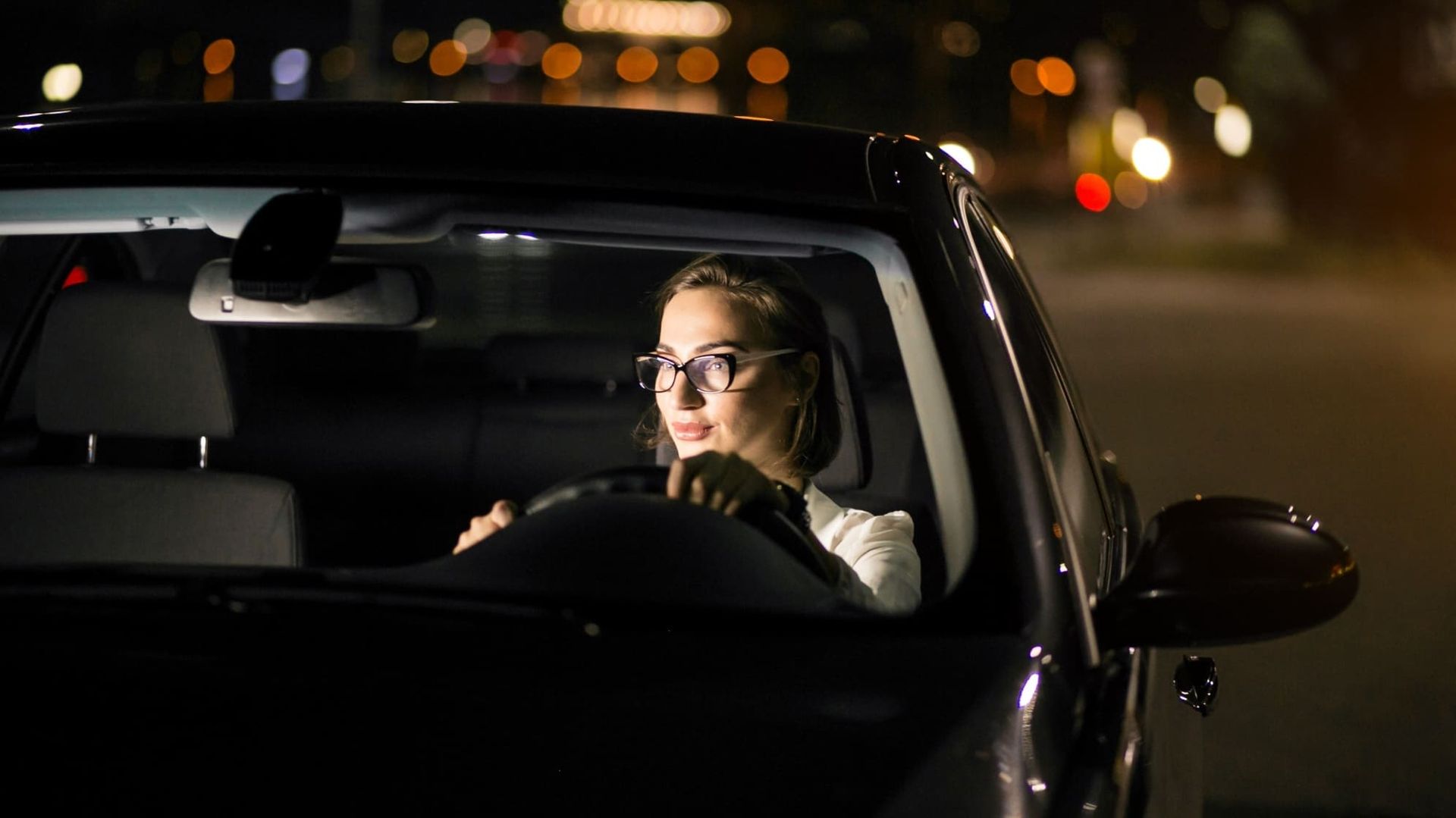
Table of Contents
- Understanding VLT and Why Tint Percentages Matter at Night
- How 50%, 35%, 20%, and 5% Tint Perform for Night Driving
- Why Dark Tint Can Make Night Driving Harder and Less Safe
- Why Ceramic Tint Matters More Than Darkness for Heat Rejection
- South Carolina Tint Laws and Practical Enforcement Considerations
- How to Choose the Best Tint Percentage for Your Driving Habits
- How Midlands Drivers Can Balance Comfort and Safety with LAT33 Tint
- FAQ: Night Driving Tint Percentage Questions
Understanding VLT and Why Tint Percentages Matter at Night
If you are searching for the best tint percentage for night driving , the key metric is VLT (Visible Light Transmission) . VLT is the percentage of visible light that passes through the glass and film together. A higher number means more light reaches your eyes. A lower number means a darker appearance and less light transmission.
What the tint “percentage” really means
When someone says “35% tint,” they are usually describing the final VLT of the window after film is installed. 35% VLT means 35% of visible light passes through . The rest is blocked or absorbed by the glass and film. This is why lower percentage equals darker tint .
At night, your eyes already have less light to work with. Add a dark film and you reduce the amount of detail you can see in shadows, on unlit sidewalks, and at the edges of your headlights. That is why
window tint night visibility depends heavily on the percentage.
Why VLT affects safety more after sunset
During the day, your pupils constrict and your brain has plenty of visual information even with a darker film. At night, your eyes open up to gather light. When you reduce incoming light, you can lose contrast and depth cues, especially when:
- It is raining and reflections increase.
- You are on unlit roads outside city centers.
- You are looking through the side windows to merge or turn.
- You have astigmatism or already struggle with headlight glare.
For many Midlands drivers, the biggest “aha” moment is not looking forward through the windshield. It is trying to spot pedestrians, cyclists, and curb edges through dark side glass during turns and lane changes.
How 50%, 35%, 20%, and 5% Tint Perform for Night Driving
Direct takeaway: For most daily drivers, 50% and 35% are the easiest to live with at night . 20% can be workable for some drivers in well lit areas but is noticeably harder on dark roads. 5% is typically the most challenging and brings real safety concerns for routine night use.
50% VLT: excellent night visibility, minimal darkness
50% VLT is a smart choice if you prioritize visibility. It looks subtle in daylight but still provides UV protection and, with ceramic film, meaningful heat rejection. For drivers who commute early mornings, drive home late from work, or frequently run errands after sunset, 50% keeps side visibility strong.
- Pros: Very good night driving comfort, clear lane changes, less strain.
- Cons: Lighter look, less “privacy” appearance compared with darker shades.
35% VLT: the best balance for most drivers
35% VLT is often the sweet spot for 35 percent tint night driving . It provides a noticeably darker daytime appearance than 50% while remaining usable at night for the majority of drivers. It is also a common choice for people who want an all around balance of tint percentage for safety and comfort.
- Pros: Strong day and night balance, better appearance than 50%, solid comfort with ceramic film.
- Cons: On very dark rural roads, some drivers may still prefer 50% on the front doors.
20% VLT: reduced night visibility, challenging on dark roads
20% VLT is where many drivers start to notice real night visibility tradeoffs, especially through side windows. In downtown Columbia or other well lit corridors, it may feel acceptable. On darker stretches, it can be stressful when turning left, backing up, or scanning for pedestrians.
- Pros: Darker daytime appearance, more perceived privacy.
- Cons: Side visibility reduction at night, greater reliance on mirrors and backup cameras.
5% VLT: severely limited night visibility, safety concerns
5% VLT (often called “limo tint”) is very dark. For regular night driving, it can substantially reduce your ability to see shapes, movement, and contrast through side glass. It may also make it harder for other drivers to make eye contact with you at four way stops or when merging, which can affect communication.
- Pros: Maximum privacy look.
- Cons: Strong night visibility loss, more risk on poorly lit roads, more scrutiny from law enforcement.
Structured comparison: 50% vs 35% vs 20% vs 5% for night driving
The format below is designed to be easy for featured snippets and AI summaries. Use it as a quick decision reference.
- 50% VLT
- Daytime appearance and darkness: Light, subtle
- Nighttime visibility rating: Excellent
- Ability to see pedestrians and obstacles at night: High
- Performance on poorly lit roads: Strong
- Headlight glare management: Moderate (film quality matters)
- Heat rejection (with ceramic film): High
- Overall suitability for night driving: Excellent for frequent night drivers
- 35% VLT
- Daytime appearance and darkness: Medium, popular
- Nighttime visibility rating: Very good
- Ability to see pedestrians and obstacles at night: Good
- Performance on poorly lit roads: Good, some drivers prefer lighter
- Headlight glare management: Moderate to good (ceramic helps)
- Heat rejection (with ceramic film): High
- Overall suitability for night driving: Best all around choice for most
- 20% VLT
- Daytime appearance and darkness: Dark
- Nighttime visibility rating: Fair to reduced
- Ability to see pedestrians and obstacles at night: Reduced, especially in side view
- Performance on poorly lit roads: Challenging
- Headlight glare management: Mixed, glare may appear harsher due to reduced contrast
- Heat rejection (with ceramic film): High (varies by film)
- Overall suitability for night driving: Acceptable mainly for mostly daytime drivers
- 5% VLT
- Daytime appearance and darkness: Very dark
- Nighttime visibility rating: Poor
- Ability to see pedestrians and obstacles at night: Low
- Performance on poorly lit roads: Weak, safety concerns
- Headlight glare management: Often worse subjectively because detail disappears and glare stands out
- Heat rejection (with ceramic film): High (but not necessary to go this dark for heat)
- Overall suitability for night driving: Not recommended for frequent night use
Why Dark Tint Can Make Night Driving Harder and Less Safe
Drivers often assume darker tint helps at night because it “reduces glare.” In real world driving, very dark tint can create new visibility problems that outweigh any comfort benefit. The issues are usually most noticeable through the front side windows, where you look to judge cross traffic, pedestrians, and curb lines.
Reduced detection of pedestrians, animals, and obstacles
Night driving already reduces color and detail perception. When you add dark tint, objects in shadow can blend into the background . This matters in Columbia and the Midlands where you may drive from bright commercial areas into darker neighborhoods quickly. Pedestrians in dark clothing, cyclists without strong lights, and animals near tree lines can be harder to spot early enough.
Difficulty seeing in poorly lit areas and during rain
On roads with minimal overhead lighting, your headlights create a narrow cone of clarity. You rely on peripheral vision and quick side glances to navigate turns and lane changes. Dark tint reduces the ambient light in that peripheral zone. Rain makes it worse by adding reflections and reducing contrast, which can make 20% feel much darker than expected.
Headlight glare can look like halos
Some drivers report that oncoming headlights look like larger halos through darker side glass. Part of this is not the film itself, but the combination of reduced scene detail and your eyes adjusting. If the surrounding view is very dark, the bright points feel more intense. Film quality matters too. Premium films tend to look clearer and more uniform, while low quality film can add haze that makes glare feel worse.
Slower reaction time during quick decisions
When you cannot see as well, you hesitate. That hesitation shows up as slower merges, longer time to commit to a left turn, and more reliance on backup cameras. A fraction of a second matters in emergency braking or when a pedestrian steps out unexpectedly.
Practical question to ask yourself: Do you want your side window view at 10:30 PM on a rainy Lexington back road to be darker than it already is?
Why Ceramic Tint Matters More Than Darkness for Heat Rejection
A major reason drivers go darker is to cut heat and sun intensity. The modern solution, especially in South Carolina heat, is often ceramic tint . Ceramic tint night driving is popular because it can reduce heat without relying on extreme darkness.
Heat rejection is not the same as darkness
Darkness is about visible light. Heat comes largely from infrared energy. Many entry level dyed films darken the view but do not reject as much infrared heat as a quality ceramic film. That is why two cars can have similar darkness but feel very different in cabin temperature.
Why lighter ceramic tint can outperform darker dyed film
Ceramic films are engineered to reject more infrared while staying optically clear. In practice, this means a driver can choose 35% or even 50% ceramic tint and still get strong comfort benefits, while keeping better night visibility compared with a darker dyed option.
Structured comparison: 35% ceramic vs 20% dyed for comfort and safety
- 35% VLT ceramic film
- Night visibility: Better, more usable side views
- Daytime comfort: High heat rejection potential
- Clarity: Typically clearer, less haze when using premium film
- Who it fits: Mixed day and night drivers who still want strong performance
- 20% VLT dyed film
- Night visibility: Reduced, especially on dark roads
- Daytime comfort: Can feel darker but may reject less infrared
- Clarity: Varies, lower cost film may add more haze
- Who it fits: Appearance focused drivers who mainly drive in daylight
If your primary goal is to cool the cabin in Columbia summers but still drive safely at night, lighter ceramic tint is often the better strategy than going darker .
South Carolina Tint Laws and Practical Enforcement Considerations
Any discussion of window tint Columbia SC should include legality and real world enforcement. Tint laws can affect your options, especially on the front side windows, which are the most important windows for night driving visibility.
Front window VLT rules matter for safety and compliance
South Carolina sets VLT requirements for front side windows. Because regulations can change and enforcement can vary, treat this as a planning step: confirm the current legal VLT before you choose a film . A reputable shop will help you select a percentage that stays within requirements while meeting your comfort and safety goals.
Law enforcement visibility concerns are real
Even if a driver prefers a darker look, very dark front windows can draw attention. It can also reduce visibility into the vehicle during traffic stops. In practical terms, choosing 35% to 50% on the front windows tends to be easier to live with at night and often attracts less scrutiny than 20% or 5% on the front.
Why “looks fine in daylight” can still be a problem
A common mistake is choosing tint based on midday appearance. In Columbia, you might evaluate the car in bright sun, then later realize the film is too dark for your commute home in winter when it gets dark earlier. Plan for your worst case conditions, not your best case daylight scenario.
How to Choose the Best Tint Percentage for Your Driving Habits
This section is written to answer voice search queries like “What tint percentage is best for night driving if I commute at night?” and “Is 35% tint too dark for night driving?”
If you drive at night often: 35% to 50% is the safer choice
If you regularly drive after sunset, early mornings, or in rain, choose 35% to 50% VLT on the front windows . It supports better lane change confidence and better pedestrian detection. For drivers with any night vision sensitivity, 50% is worth considering.
If you mostly drive in the daytime: 20% to 35% can be acceptable
If your driving is almost entirely daytime, 20% to 35% VLT may be acceptable depending on where you drive. If you occasionally drive at night, remember that those occasional trips might be on unfamiliar roads, which is when visibility matters most.
If you want one setup for mixed driving: 35% is usually the best balance
For many Midlands drivers, 35% is the best “one car, all conditions” choice . It provides noticeable shading during the day without pushing nighttime visibility into the stressful zone for most people.
Rural vs urban driving: lighting changes everything
- Urban and well lit areas: Darker tint can feel less problematic because streetlights provide ambient light.
- Rural or poorly lit roads: Dark tint feels dramatically darker. This is where 20% and 5% can become a safety concern.
If you drive between Columbia and surrounding areas like Lexington, Irmo, West Columbia, or Cayce, consider the darkest stretches of your route, not just the bright ones.
Two quick rules that prevent regret
- Rule 1: If you have to ask “Can you see at night with 20% tint?” you probably should go lighter on the front windows.
- Rule 2: If heat is your main complaint, upgrade film technology (ceramic) before you go darker.
How Midlands Drivers Can Balance Comfort and Safety with LAT33 Tint
Choosing tint is not just selecting a number. It is matching your driving habits, visibility needs, and comfort goals to the right film and the right VLT.
Latitude 33 Window Tint (LAT33 Tint) serves Columbia,
West Columbia, Lexington, Irmo, and Cayce with premium window film options, including
LLumar and Vista ceramic tint .
A practical recommendation for many local drivers
For drivers who want a reliable daily driver setup, a common strategy is:
- Front doors: 35% to 50% VLT ceramic for night visibility
- Rear doors and rear glass: can be darker depending on preference and legality, since you rely less on those windows for turning visibility
This approach supports day comfort while protecting what matters most for safety: your ability to see clearly through the windows you actively use for driving decisions.
Why consultation matters more than copying someone else’s tint
Two people can choose the same percentage and have different experiences due to vehicle glass tint from the factory, headlight brightness, eyesight, and driving routes. A professional shop can help you avoid the common mistake of selecting a shade that looks great in the parking lot but feels too dark on your actual commute.
If you want a single sentence summary: In the Midlands, 35% to 50% ceramic tint on the front windows is typically the best balance of heat rejection, UV protection, and night driving safety .
FAQ: Night Driving Tint Percentage Questions
What is the best tint percentage for night driving?
For most drivers, 35% to 50% VLT on the front windows provides the best blend of night visibility and daytime comfort.
Is 35% tint too dark for night driving?
Usually no. 35% is a common “best balance” choice . If you frequently drive on very dark roads, consider 50% on the front doors.
Can you see at night with 20% tint?
Some drivers can, especially in well lit areas. On poorly lit roads, 20% can noticeably reduce side visibility and increase stress during turns and lane changes.
Is 50% tint dark enough for daytime heat?
With a quality ceramic film, 50% can still provide strong heat rejection and UV protection while maintaining excellent night visibility.
Does ceramic tint help with night visibility?
Ceramic film helps because it can deliver comfort benefits without needing extreme darkness. Lighter ceramic tint keeps visibility better than going darker with dyed film .
What tint percentage is safest for night driving?
From a pure visibility standpoint, 50% is generally safest on front side windows, with 35% close behind for most drivers.
Will 5% tint make night driving dangerous?
It can. 5% greatly limits the light you can see through , which can increase risk in unlit areas and during rain.
How does tint percentage affect headlight glare at night?
Darker tint can reduce overall brightness, but it can also reduce scene detail and contrast. Premium, clear films often feel better than simply going darker .
What tint percentage do most people get for daily driving?
Many daily drivers choose 35% on the front windows because it balances appearance, comfort, and usability at night.
Is darker tint worse for night driving?
In general, yes. Lower VLT means less light transmission , which usually makes night driving visibility worse.
Can you drive safely at night with 20% tint?
It depends on your eyesight, the roads you drive, and lighting. If you drive rural routes or frequently in rain, 35% to 50% is usually the safer choice .
What tint percentage blocks heat without reducing night visibility?
Look at 35% to 50% ceramic tint . You can get meaningful heat rejection while keeping visibility much better than very dark options.
Does South Carolina have restrictions on tint darkness for safety?
Yes. South Carolina sets VLT requirements, especially for front side windows. Confirm the current legal limits before installing.
What does LAT33 Tint recommend for drivers who commute at night?
For most night commuters, LAT33 Tint typically guides drivers toward 35% to 50% VLT on the front windows , often paired with ceramic film for heat rejection.
Should you go lighter on front windows for night visibility?
Often yes. The front side windows are critical for driving decisions. Going lighter up front is one of the best ways to improve night visibility while still tinting the vehicle for comfort.
Conclusion: The best night driving tint is the one you can see through
If you want the most reliable answer for daily driving in Columbia and the Midlands, 35% to 50% VLT is typically the best window tint percentage for night driving . It delivers a practical blend of daytime heat relief and nighttime clarity. Darker options like 20% and especially 5% can look great in bright sun, but they can reduce your ability to see pedestrians, obstacles, and road edges after dark, particularly on poorly lit roads or in rain. The smarter approach for comfort is often ceramic tint technology , because lighter ceramic films can block significant heat while maintaining strong night visibility.
Prioritizing safety over maximum darkness is essential if you drive at night often. If you are in Columbia, West Columbia, Lexington, Irmo, or Cayce and want a setup tailored to your routes and comfort goals,
contact
Latitude 33 Window Tint (LAT33 Tint) for an expert consultation and professional installation using premium
LLumar and Vista ceramic tint.